
When the land carries the value, your buyer is a builder or developer rather than a resident, and pricing follows land comparables minus demolition, approval time and their required return. Do not stage or photograph the interior — and consider whether obtaining entitlements before sale would add more than any preparation could.
A point arrives where the house contributes nothing, and occasionally subtracts. Selling in that position is a different exercise, and conventional approaches leave money behind.
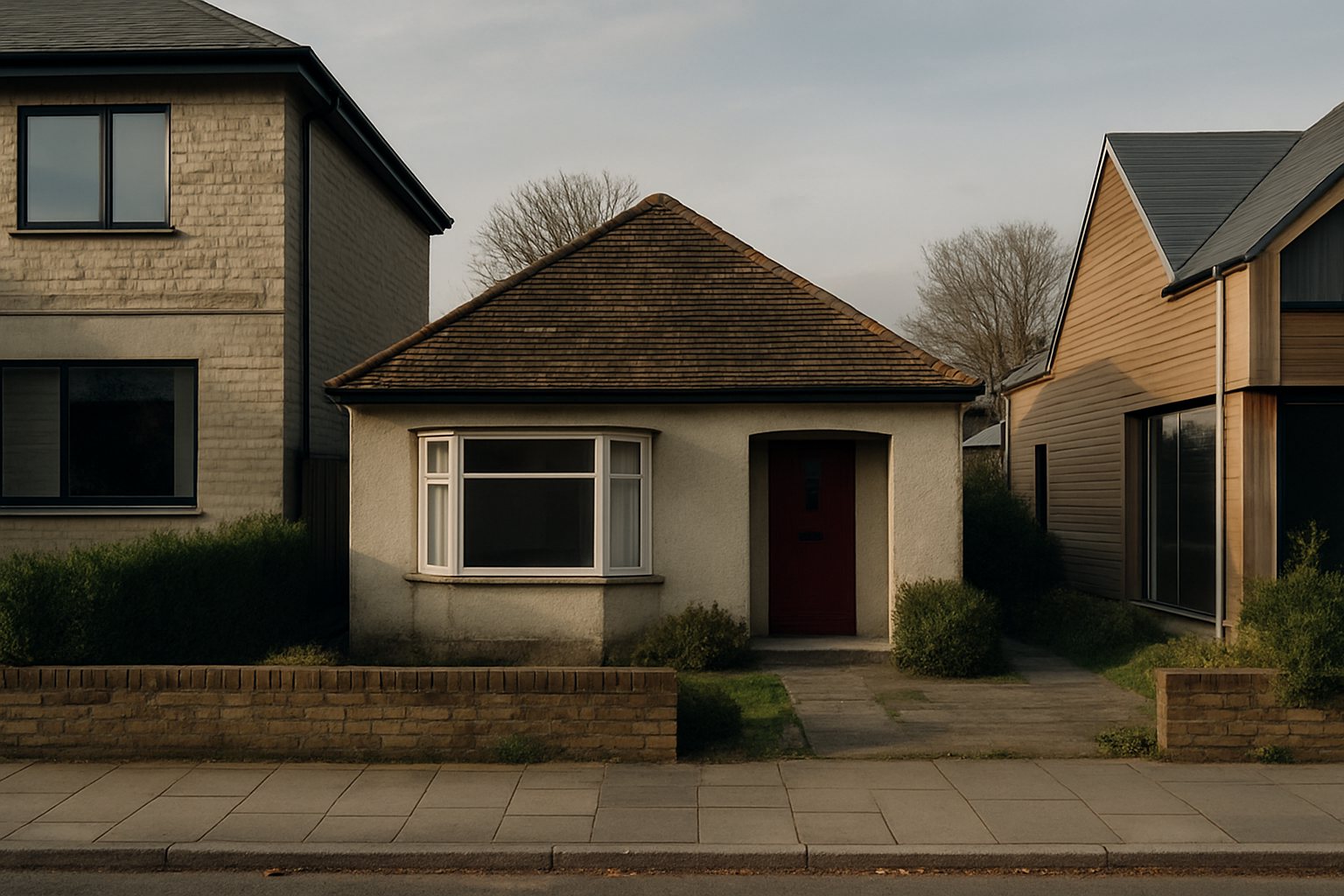
In constrained markets a point arrives where the house contributes nothing to the value of the property, and occasionally where it subtracts — because the next owner will pay to remove it.
Selling in that position is a different exercise from selling a home, and sellers who approach it conventionally consistently leave money behind.
It is usually clear from the comparables. Where recent sales on the street have been followed by demolition, or where the land component of local values has risen faster than anything else, the market has already answered.
The signals are an older or unrenovated house on a desirable lot, a property where renovation cost would approach new construction, and a neighborhood where the surrounding stock has largely turned over.
The emotional difficulty is real. Being told the house you raised a family in has no value is a hard conversation, and it deserves to be handled as one.
This is the central point.
You are no longer selling to someone who wants to live there. You are selling to a builder, a developer, or an end-user who intends to build their own house.
Those buyers assess the property on entirely different criteria: what can be built, what it will cost, how long approval takes, and what the finished product will sell for. The kitchen is irrelevant to all of it.
The comparables are other land sales and other properties bought for redevelopment, not improved sales of finished houses.
From the land value, a buyer deducts demolition cost, permitting time, carrying cost through construction, and their required return. What is left is what they can pay.
A seller who prices against improved comparables and waits for a residential buyer who never arrives is the most common failure in this situation.
Not the house. The buildable envelope.
Lot size and dimensions. Zoning, height limits and setbacks. Coverage ratios. Whether covenants or design review add constraints. Slope, geotechnical conditions and access. On the coast, whether shoreline regulation restricts what can be built and where.
Whether the lot can be divided is the largest single variable where it applies, and it is worth investigating properly before listing rather than leaving a buyer to discover it.
The most underused option available to a seller in this position.
A property sold with approved plans, or with entitlements already obtained, removes the buyer's largest risk and their longest delay. That is worth a premium, frequently a substantial one.
It costs time and money to pursue, and it is not right for every seller. But where the approval process locally is slow and uncertain, obtaining it before sale can add more than any amount of preparation to the house.
Do not stage a property being sold for its land. Do not photograph the interior extensively. Do not spend on cosmetic improvement, which returns nothing here.
What matters instead: the lot, its dimensions and orientation, the survey, the zoning position, what the buildable envelope allows, any plans or studies you hold, and the surroundings.
Aerial photography earns its cost. Interior photography largely does not.
Some sellers in this position consider building themselves and selling the finished house.
That is a development project rather than a sale, with the timeline, financing, risk and expertise that implies. It occasionally makes sense and frequently does not, and the honest assessment is worth making before committing rather than a year in.
For most sellers the better answer is to establish the land value accurately, obtain what entitlements are worth obtaining, and sell to someone whose business this is.
Usually from the comparables. Where recent sales on the street have been followed by demolition, or renovation cost would approach new construction, the market has already answered the question.
A builder, a developer, or an end-user intending to build their own house. They assess what can be built, what it will cost, how long approval takes and what the finished product sells for. The kitchen is irrelevant to all of it.
Against land sales and redevelopment purchases rather than improved comparables. Buyers deduct demolition, permitting time, carrying cost and their return from land value, and what remains is what they can pay.
The buildable envelope — lot dimensions, zoning, height, setbacks, coverage, covenants, slope and access. Whether the lot can be divided is the largest single variable where it applies.
Frequently worth considering. Selling with plans or entitlements removes the buyer's biggest risk and longest delay, which commands a premium. Where local approval is slow and uncertain, it can add more than any preparation to the house.
A select network of the nation's most accomplished luxury real estate professionals.