
Security at this level is mostly a siting and layout question rather than an equipment one. Distance from the public realm, elevation, natural screening and a single access point matter more than any system, and none of them can be retrofitted well.
Security at this level is mostly a property question rather than an equipment question, and almost none of what matters can be retrofitted well.
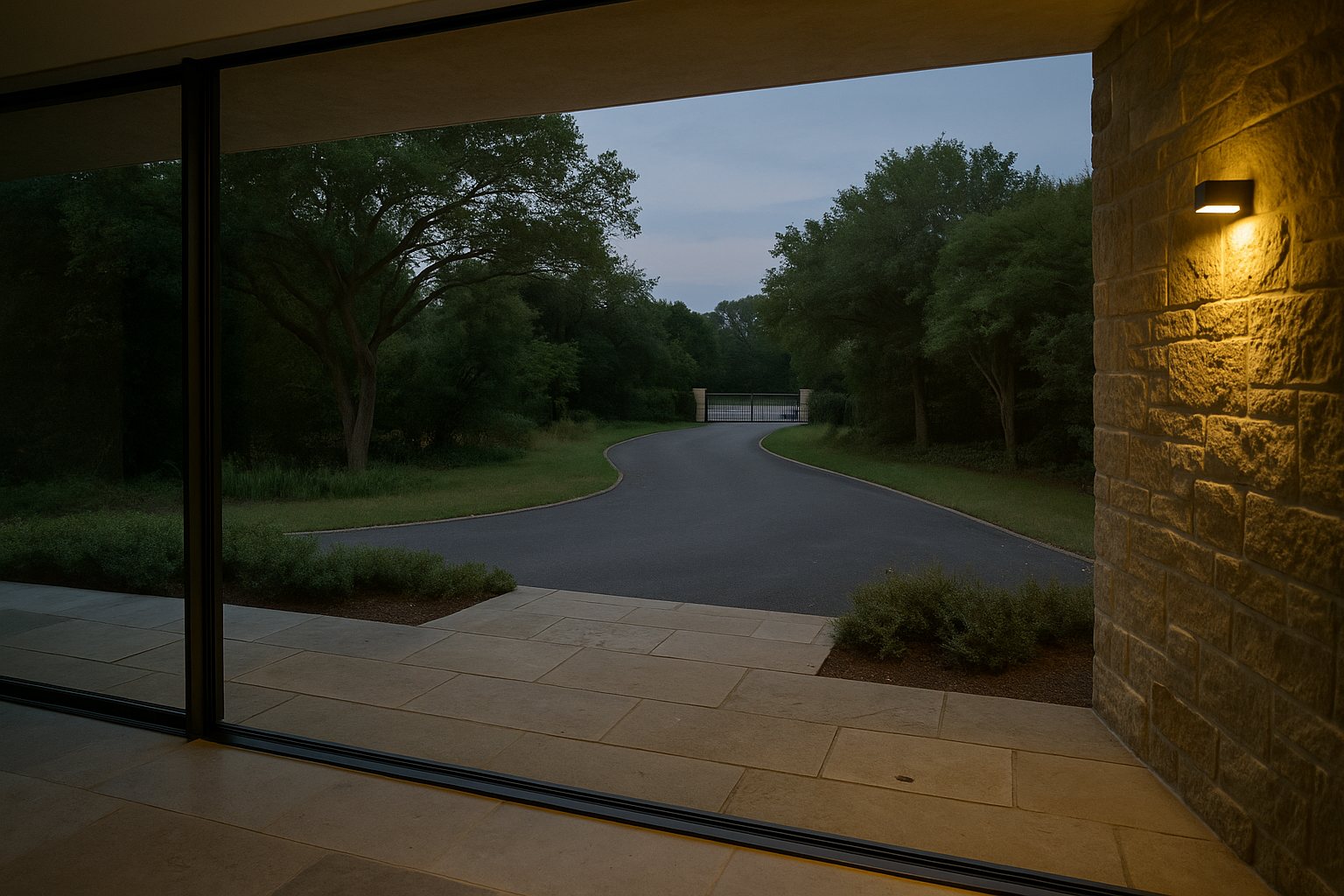
Security at the top of the market is mostly a property question rather than an equipment question. The things that matter are decided by where a house sits, how it is approached and how it is laid out, and almost none of them can be retrofitted well.
Buyers who intend to install a system after moving in are addressing the least important layer.
Distance from the public realm. Elevation relative to the approach. Natural screening from mature planting or topography. A single point of vehicular access rather than several.
A property set well back, above its approach, with one way in, is fundamentally more private than one at the roadside with a system bolted on.
Walk the boundary and look back at the house from every public vantage point. Then look at aerial imagery, because that is what anyone else will do.
Gated entrances are frequently the only measure a property has, and a gate with an open boundary is a gesture rather than a control.
Establish what the actual perimeter is, whether it is continuous, and where the weak points sit. On most properties they are the sides and rear, which nobody photographs and buyers rarely walk.
Where a property adjoins open land, a trail, a beach or a waterway, understand what access that creates and whether it can be managed.
Well-designed properties separate arrivals: family, guests, staff, deliveries and contractors.
A house where a delivery driver reaches the main entrance, or where staff and family share a single circulation route, has a design problem that no camera addresses.
Look for a service entrance, a separate parking area, and somewhere deliveries can be received without anyone entering the property proper.
Coverage is the easy part. The questions that matter are who monitors it, what happens when something triggers, and how long footage is retained.
An unmonitored system records an incident rather than preventing one. That may be all you want, and it should be a decision rather than an assumption.
Establish who currently holds administrator access, and get it transferred properly at closing along with the rest of the technology.
Households with staff, contractors and regular visitors have a larger attack surface than any structure.
Vetting, defined access, and clear confidentiality expectations matter more than hardware. Most privacy failures at this level come from someone who was legitimately present rather than from an intrusion.
Where a property comes with existing staff, that is worth thinking about carefully rather than treating as convenient.
Deeds are public. A property held in your own name is searchable, and search is how most exposure begins.
Where privacy is a genuine objective, the ownership structure should be decided before purchase rather than corrected afterward, since restructuring can trigger transfer tax and reassessment.
Understand what it does and does not achieve. It reduces casual visibility rather than making ownership secret.
Worth naming honestly. Security measures that read as fortification — high walls, visible hardware, bars, an institutional gate — narrow the buyer pool and can reduce value.
The properties that hold value are the ones where privacy comes from siting, planting and layout rather than from equipment. That is also, in practice, the more effective arrangement.
Ask the seller whether there have been incidents, disputes with neighbors, or problems with access.
Disclosure obligations vary and the answer may be limited, but a specific question is harder to sidestep than a general one, and the response tells you something either way.
Siting. Distance from the public realm, elevation above the approach, natural screening and a single vehicular access point do more than any system, and they cannot be added later.
No. A gate with an open boundary is a gesture rather than a control. Establish what the actual perimeter is, whether it is continuous, and where the weak points sit — usually the sides and rear.
Separated flows. Family, guests, staff, deliveries and contractors should not share one route. A house where a delivery driver reaches the main entrance has a design problem cameras do not solve.
People who were legitimately present rather than intrusions. Vetting, defined access and clear confidentiality expectations matter more than hardware, particularly where a property comes with existing staff.
Yes. Measures that read as fortification narrow the buyer pool. Properties that hold value achieve privacy through siting, planting and layout, which is also the more effective arrangement.
A select network of the nation's most accomplished luxury real estate professionals.