
General movers handle furniture well and specialist items badly, and mover liability is frequently calculated by weight rather than value. Identify what needs specialist handling, arrange separate transit coverage, photograph everything before packing, and confirm your insurer knows about storage gaps.
The move is treated as logistics. On a household containing art, wine, instruments or cars, it is where more value is destroyed than at any other stage.
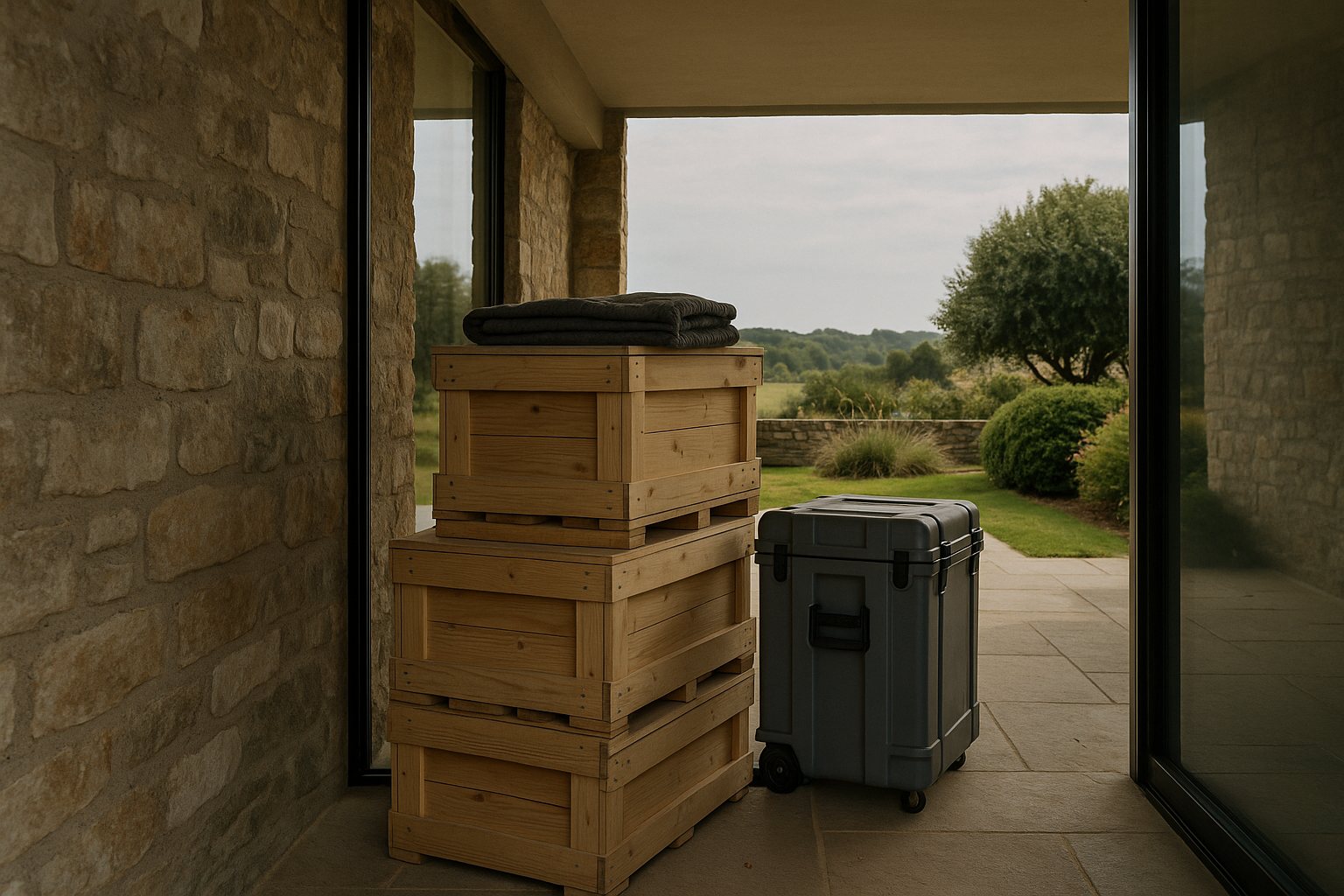
The transaction closes and attention moves to the move, which is treated as logistics. On a household containing art, wine, instruments, cars or antiques, it is the point at which more value is destroyed than at any other stage.
The mistakes are consistent and almost entirely preventable.
The distinction that matters most.
A competent general moving company handles furniture and boxes well. Fine art, wine, pianos, clocks, chandeliers, large mirrors and vehicles each require different handling, different materials and different experience.
Most losses happen when a general crew treats a specialist item as furniture, in good faith, because nobody separated it out.
Identify what needs specialist handling before you book anything, and engage the specialists directly rather than assuming a general contract covers it.
Standard mover liability is frequently calculated by weight rather than value, which is close to meaningless on a painting or a case of wine.
Establish precisely what coverage applies, and arrange separate transit coverage where the standard terms do not reflect what you are moving.
Tell your insurer before the move. Items in transit or in storage may not be covered under a policy written for a fixed address, and a gap between two properties is exactly when a loss becomes uninsured.
Photograph everything of value, in detail, before packing begins. Condition reports for art and antiques. A written inventory with locations.
Without a record of prior condition, a damage claim becomes an argument about whether the mark was already there. With one, it is administrative.
Have anything of significant value appraised beforehand if it has not been recently. That serves both the insurance position and any later question about what was moved.
More vulnerable than most people appreciate.
Temperature excursion during transit or storage can damage a collection permanently, and vibration matters too. Refrigerated transport is not optional on anything of consequence.
Allow settling time on arrival before the wine is drunk or assessed, and confirm the destination storage is at temperature before anything arrives.
On a very old or very fragile collection, the honest advice is sometimes that it should not be moved at all, and selling in place is the better outcome. That is worth asking a specialist rather than assuming.
Crating rather than wrapping for anything significant. Consideration of whether frames and glazing travel separately. Acclimatization on arrival rather than immediate hanging.
Establish the destination environment first. Humidity, light and temperature at the new property may differ considerably from what a collection is used to, and that matters more than the journey.
Enclosed transport for anything valuable. Establish what the carrier requires regarding fuel levels, batteries and fluids, and what their coverage actually is.
The same applies to anything else mechanical or unusual: safes, gym equipment, wine cabinets, outdoor sculpture. Each has its own requirement and none of them is obvious to a general crew.
Where timing means possessions sit in storage between properties, that period carries most of the exposure.
Confirm the facility is climate controlled where it needs to be, that your coverage extends to it, that access is controlled, and that the inventory is documented on the way in as well as out.
Where possible, avoid the gap entirely. A rent-back on either side costs less than most storage risks.
Rarely. Art, wine, pianos, clocks, chandeliers and vehicles each need different handling and experience. Most losses happen when a general crew treats a specialist item as furniture because nobody separated it out.
Check carefully. Standard mover liability is frequently calculated by weight rather than value, which is meaningless on a painting. Arrange separate transit coverage and tell your insurer before the move.
Photograph everything of value in detail, obtain condition reports for art and antiques, and keep a written inventory. Without a record of prior condition, a damage claim becomes an argument about whether the mark was already there.
In refrigerated transport, with settling time on arrival and destination storage confirmed at temperature beforehand. On a very old or fragile collection, a specialist may advise that it should not be moved at all.
The storage gap between properties. Confirm climate control, that coverage extends to the facility, and that inventory is documented in both directions. Where possible avoid the gap entirely.
A select network of the nation's most accomplished luxury real estate professionals.