
The land price is the smallest of several numbers. Establish the buildable envelope, commission a geotechnical investigation, and obtain written utility connection estimates before offering — on remote sites, bringing services in can exceed what you paid for the land.
It looks like the cheapest route to the house you want. Frequently it is not, because the land price is the smallest of several numbers.
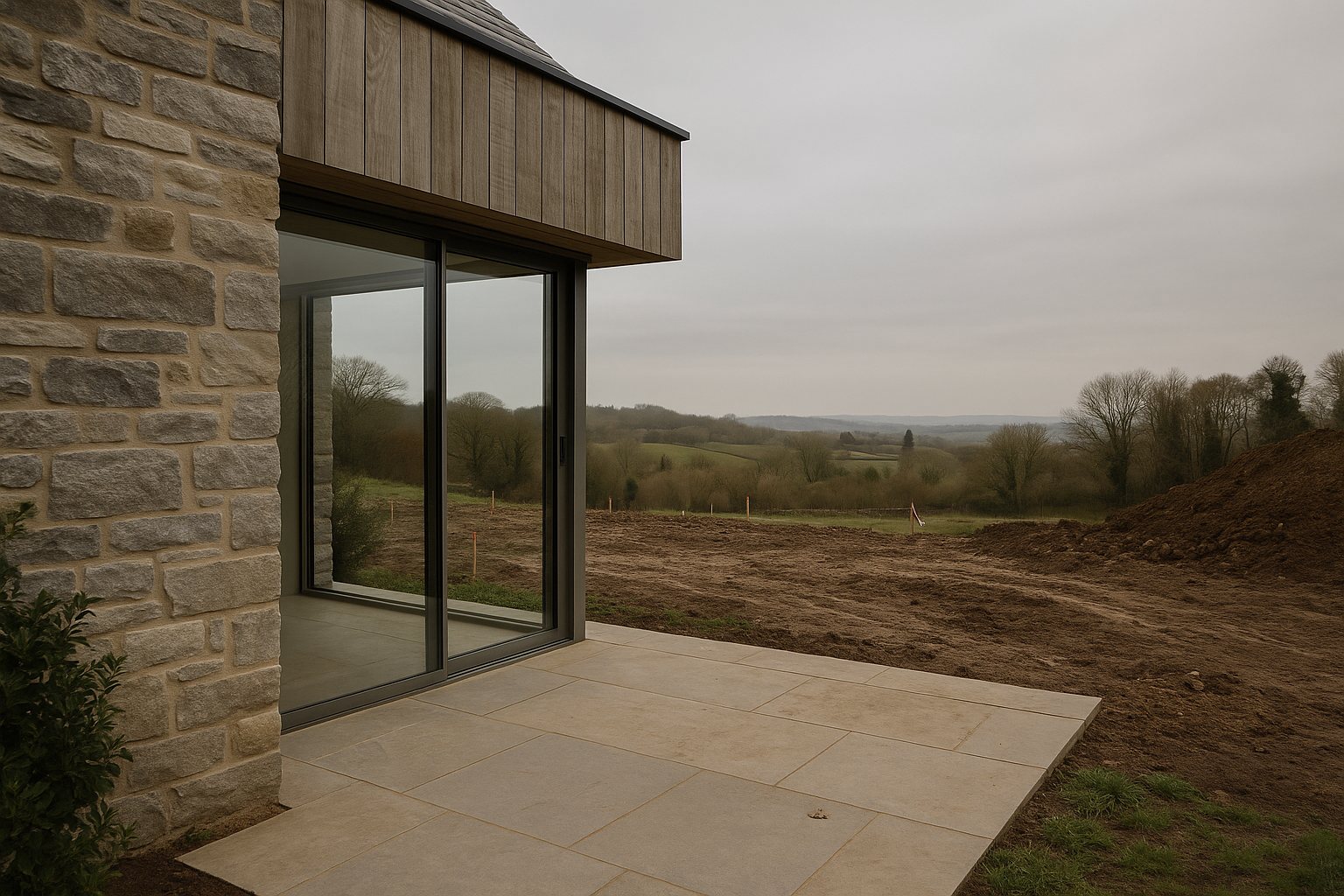
Buying a lot to build on looks like the cheapest route to the house you want. Frequently it is not, and the reason is that the land price is the smallest of several numbers.
What decides whether a build works is what the site costs to make buildable, how long approval takes, and whether the finished result can be delivered for what you expect.
Not the lot size. What can actually be constructed on it.
Zoning, height limits, setbacks from every boundary, coverage ratios, and any covenants or design review. On slopes, geotechnical constraints. On the coast or near water, shoreline regulation that can restrict both position and form.
Then subtract the easements. A utility or access easement crossing the middle of a site can eliminate the only sensible building position.
Take a sketch to the relevant authority informally before committing. Most will indicate whether something is plausible, and that conversation costs nothing against discovering the answer afterward.
Buyers estimate construction from a cost per square foot and are then surprised by everything that happens before construction starts.
Clearing, excavation, grading, retaining structures, drainage, and foundation design responsive to whatever the soils report says. A geotechnical investigation before purchase is worth its cost many times over, because bearing capacity and slope stability decide the foundation, and the foundation is where site budgets fail.
On a difficult site, site work can approach or exceed the cost of the building above it.
The most commonly underestimated item on rural and semi-rural lots.
Power, water, sewer or septic, gas and telecommunications each have to reach the site. Where connections are distant, the cost of extending them is borne by you, and on a remote parcel it can exceed what you paid for the land.
Obtain written estimates from each utility before purchase rather than assumptions. Where there is no municipal sewer, establish septic feasibility through percolation testing and confirm a viable system and reserve area exist.
Two separate questions.
Legal access means a recorded right to reach the property, not a track you drove in on. Informal permission is worthless once the neighboring parcel sells.
Buildable access means a driveway that can actually be constructed to the required standard, at a manageable grade, with turning for emergency and delivery vehicles. On steep ground that alone can be a substantial project.
Design, approval, tender, construction. Each stage takes longer than the estimate, and approval frequently takes longer than construction in constrained markets.
Where several bodies review sequentially, a refusal at any stage restarts part of the process. Assume years rather than seasons, and assume you are housed elsewhere and managing a project throughout.
Land is generally financed on different terms from a house, with larger deposits and shorter terms. Construction lending draws in stages against progress, with interest accruing on drawn amounts during the build.
Establish the whole structure before buying the land, including how construction lending converts to a permanent loan afterward. Buyers who purchase land and arrange construction finance later occasionally find the second half harder than expected.
Set the total realistically: land, site work, services, design and approval fees, construction, contingency, and the cost of housing yourself for the duration.
Then compare it against buying something finished. Building gives you exactly what you want and occasionally costs less. Frequently it costs more and takes years, and the difference is only worth it if the result is something you could not otherwise buy.
A partially completed project is also the hardest thing in residential property to sell, so the decision should be made with the whole timeline in view rather than the first stage.
The buildable envelope rather than the lot size — zoning, height, setbacks, coverage, covenants, geotechnical constraints and easements. An easement crossing the middle of a site can eliminate the only sensible building position.
Because buyers estimate from a cost per square foot and are surprised by clearing, excavation, grading, retaining, drainage and foundation design. On a difficult site, site work can approach or exceed the cost of the building above it.
Power, water, sewer or septic, gas and telecoms each have to reach the site, and the cost of extending them falls on you. On a remote parcel it can exceed the land price. Get written estimates before purchase.
Longer than anyone says. Approval frequently takes longer than construction in constrained markets, and a refusal at any stage restarts part of the process. Assume years, housed elsewhere and managing a project throughout.
Sometimes, but frequently not once site work, services, fees, contingency and the cost of housing yourself are included. It is worth it when the result is something you could not otherwise buy.
A select network of the nation's most accomplished luxury real estate professionals.